
Our 2026 winners
Congratulations to our Awards for Excellence 2026 winners
Brought to you by our valued sponsor:
The WasteMINZ Awards for Excellence recognise the industry superstars who have been part of an amazing initiative or project over the past 12 months.
Thank you to everyone who submitted a nomination!
Our judges found their jobs very challenging this year - the innovation, creativity, and passion evidenced in all the nominations this year meant it was difficult for them to mark!
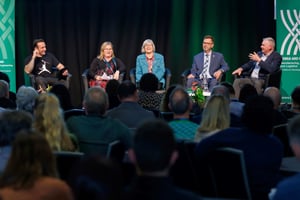
The Awards for Excellence ceremony will be held in Wellington on Tuesday, 19 May as part of the WasteMINZ + ALGA Conference 2026.

Excellence in Waste Reduction or Product Redesign
Winner
Rescued Limited - Upcycled United
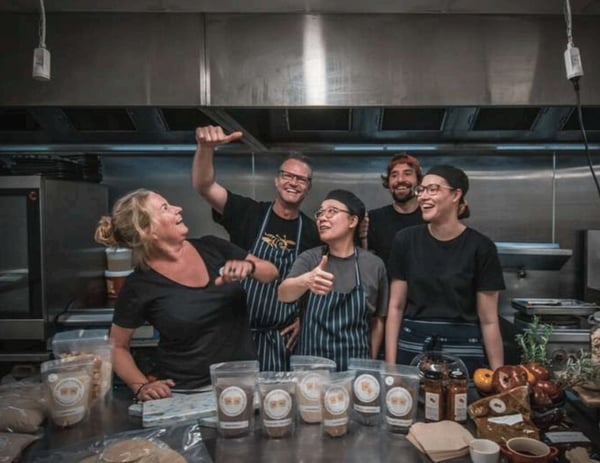
Upcycled United, led by Rescued Limited and supported by New Zealand Food Innovation Network, New Zealand Food Network/KiwiHarvest and Bidfood, prevents edible surplus from becoming waste by transforming it into high-value food ingredients. Through a circular, prevention-first model, surplus food is redesigned as a manufacturing input rather than a disposal problem.
Since 2022, more than 200 tonnes of edible surplus have been diverted, avoiding over 85,000 kilograms of carbon emissions. Products such as Rescued Bread Flour replace virgin ingredients while delivering significantly lower environmental impacts.
By combining innovation, collaboration, and verified impact, Upcycled United demonstrates how food waste prevention can deliver environmental, economic, and social value at scale.
Finalists
Hauraki District Council - Waste Management and Minimisation programme
Hauraki District Council’s waste reduction achievements are driven by strong, values‑led leadership and an empowered frontline team. Under the leadership of Renee Wentzel, the Council’s waste management function has been built from the ground up with a clear focus on practical systems that work for people, staff, and the environment.
Renee has led a shift toward people‑centred service delivery, enabling frontline staff to move from desk‑based roles into active community educators. By redesigning transfer station operations and workflows, staff are better supported to engage with residents, improve safety, and encourage correct recycling and waste reduction behaviours. This approach has strengthened trust and participation across the district.
The team works closely with local businesses, community groups, recyclers, and neighbouring councils to recover materials previously sent to landfill. Initiatives such as soft plastics, e‑waste, batteries, and hands‑on Kai Care workshops have delivered practical waste reduction while supporting community learning and inclusion locally.
WSP and SPARK consortium - North East Link Central Package

The North East Link Central Package challenged conventional tunnelling spoil management by replacing disposal-led practice with real-time classification and reuse. Using portable XRF technology and multi-line evidence assessment, spoil was rapidly assessed on site.
Large volumes of material previously classified as waste were safely reclassified for reuse, avoiding extensive lime treatment, landfill disposal, and unnecessary emissions. The approach reduced costs, improved programme delivery, and decreased disruption to surrounding communities.
This approach was first‑of‑its‑kind for major tunnelling works in Melbourne and required close collaboration with the client,
contractors, and regulators.
By reframing spoil as a resource rather than a liability, the project set a new benchmark for sustainable tunnelling projects.
Excellence in Reuse, Repair and Repurposing
Winner
Repurpose It - Advanced Wash Plant & Circular Resource Recovery Program
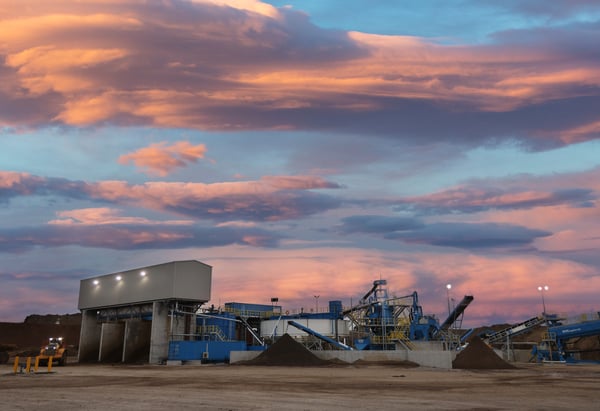
The Repurpose It Advanced Wash Plant is redefining how contaminated soils and construction materials are managed in Australia, proving that some of the most challenging waste streams can be safely transformed into valuable resources.
As the first operational soil wash plant of its kind in Australia, the facility uses advanced washing, separation, and treatment processes, the plant recovers aggregates, sands, clays, and organics from contaminated soils and construction and demolition materials. To date, more than three million tonnes of material have been processed, with over 98 percent diverted from landfill and returned to productive use across infrastructure, construction, and landscaping projects.
Together, the wash plant and associated programmes set a new benchmark for sustainable, high‑impact resource recovery.
Finalists
Otaihanga Zero Waste
Otaihanga Zero Waste on the Kāpiti Coast shows how community-led reuse systems can reduce landfill while strengthening local resilience. Since opening in 2024, the site has recovered timber, building products, electronics, and household items for reuse and responsible recycling.
More than 129 tonnes of timber and significant volumes of construction materials have been diverted from landfill, saving the community tens of thousands of dollars through affordable resale. Partnerships with council, schools, and businesses support better sorting and reuse at the source.
By combining hands-on recovery with education, Otaihanga Zero Waste turns circular economy principles into everyday practice.
Warren and Mahoney - iSite Aotearoa: Gateway to our place
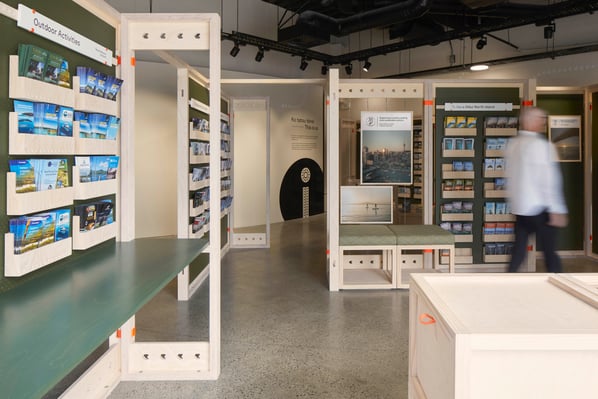
This project reimagines New Zealand’s iSite visitor centres through a circular, reuse-led design framework. Instead of disposable fit-outs, a modular kit-of-parts allows components to be reused, repaired, and redeployed across the national network.
This approach reduces material use, lowers embodied carbon, and cuts long-term costs while still reflecting local identity. Strong collaboration across councils, designers, and manufacturers has helped shift thinking in the property and design sectors.
The project demonstrates that sustainability and strong visitor experience can go hand in hand, offering a scalable model for low-waste public infrastructure.
Excellence in Resource Recovery
Winner
Auckland Council - The Recovery Project: Rethinking disaster recovery through resource reuse
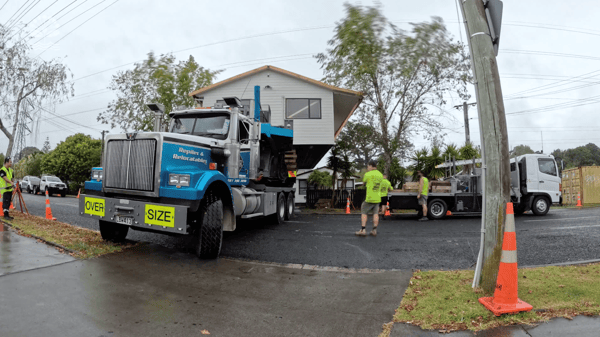
Following Auckland’s 2023 storm events, The Recovery Project reimagined large-scale site clearance through a resource recovery lens. Led by Auckland Council, the project replaced demolition-first approaches with careful assessment, relocation, and deconstruction.
Around one third of affected homes have been relocated for reuse, preserving thousands of square metres of housing. Thousands of tonnes of materials have been recovered for reuse and recycling, delivering major emissions savings and supporting community organisations and training providers.
By embedding circular principles into disaster recovery, the project shows that rebuilding after a crisis can also reduce waste, retain value, and strengthen communities.
Finalists
Onehunga Zero Waste Deconstruction
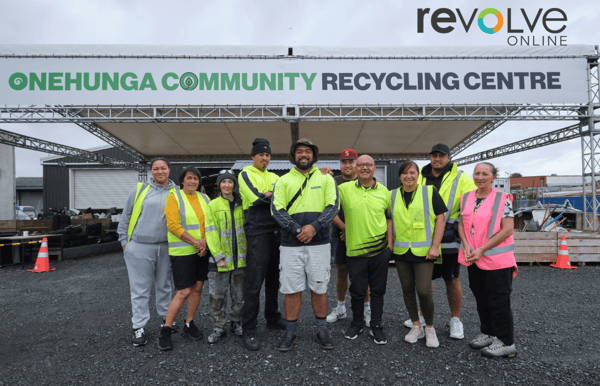
Onehunga Zero Waste Deconstruction replaces demolition with careful dismantling, treating buildings as material banks. As a trusted Auckland Council delivery partner, the organisation recovers materials at their highest value, even from complex or flood-damaged sites.
Through disciplined sequencing and on-site sorting, around 95 percent of materials are diverted from landfill. Whole items are reused, clean streams are recycled, and disposal is a last resort. The model also creates local jobs that pay the Living Wage and build sector capability.
The project proves that deconstruction can deliver reliable, high-quality recovery outcomes while supporting social and environmental goals.
Plasback and Tama Oceania - Farm plastics recovery and recycling scheme
Farm plastics are essential to modern agriculture but difficult to recycle due to contamination and distance from processing facilities. The Plasback scheme addresses this challenge through a coordinated national recovery and recycling system led by Tama Oceania.
The scheme uses a network of regional balers and a high-capacity South Island consolidation site to clean, shred, and prepare plastics such as silage wrap and containers for recycling. Around 7,000 tonnes of farm plastics are collected and recycled each year, with nothing sent to landfill, preventing an estimated 9,000 tonnes of carbon emissions annually.
By sharing responsibility across suppliers, farmers, and processors, Plasback demonstrates how product stewardship can work in practice, protecting rural environments while supporting farmers to participate easily.
Excellence in Sustainable Waste Disposal
Winner
ENGEO and Classic Developments - Smith Street Mine Shaft Encapsulation
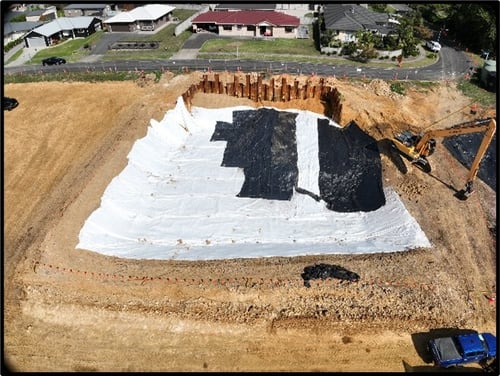
The Smith Street Mine Shaft Encapsulation project transformed a contaminated legacy mining site into a safe, long-term community asset. Instead of excavating and landfilling contaminated soils, the project repurposed them into a carefully engineered on-site encapsulation system.
Around 4,000 cubic metres of contaminated soil and spoil were safely reused to stabilise a historic mine shaft and create a permanent containment structure. This avoided tens of thousands of kilometres of truck movements, saved millions in disposal costs, and eliminated significant carbon emissions.
By combining technical rigour, regulatory collaboration, and innovative design, the project delivered a zero-waste outcome while protecting both community health and the environment.
Nurox Hydrothermal, Tennex Health & Hygiene, Interwaste
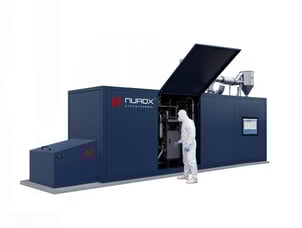
Hydrothermal Processing introduces a breakthrough approach to treating hazardous wastes such as PFAS, cytotoxic pharmaceuticals, and complex industrial residues. Developed by Nurox Hydrothermal, the process uses heat, water, and air to permanently destroy hazardous compounds.
Operating in a closed system with no harmful emissions, the technology converts dangerous waste into stable, non-hazardous outputs and reusable chemical inputs. This removes the need for landfill disposal, long-term storage, or offshore export.
By enabling onshore treatment of difficult waste streams, hydrothermal processing strengthens national self-sufficiency and represents a major shift toward safer, more sustainable waste disposal.
Excellence in Research & Advocacy
Winner
University of Otago, in partnership with the Retirement Village Association - Waste less, care more: Reducing food waste in aged residential care
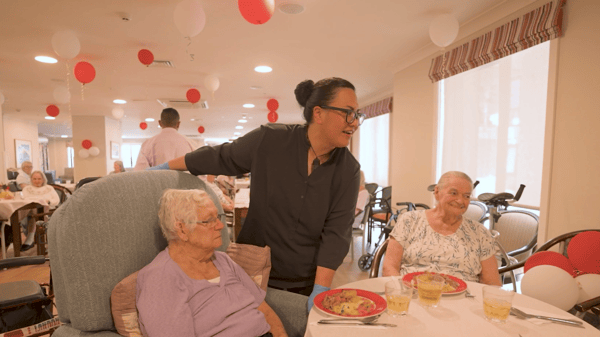
Food waste is often seen as unavoidable in aged care, but the Waste less, care more project shows that meaningful reductions are possible without compromising resident wellbeing. Led by Elena Piere at the University of Otago in partnership with the Retirement Village Association and associated aged care residential sites across Aotearoa, this project focused on practical, staff-led change within real-world care environments.
Fourteen facilities co-designed and tested a food waste reduction toolkit over six months. Using simple monitoring and behaviour-based changes, sites identified where waste occurred across food preparation, service, and plate waste. The result was an average 24 per cent reduction in food waste, keeping more than 13 tonnes out of landfill. Facilities also reported improved communication between care and kitchen staff, more efficient food planning, and better alignment with resident preferences.
Beyond environmental outcomes, the project strengthened teamwork and improved dining experiences for residents. The toolkit is now available nationally, proving that evidence-based, co-designed solutions can deliver lasting change across the aged care sector.
Finalists
Steph Martin - Guiding residential construction towards circular waste management

Led by independent researcher Steph Martin, this project addresses one of Aotearoa’s largest sources of waste: residential construction. Instead of focusing on individual behaviour, the research examined how systems, incentives, and time pressures shape on-site waste practices.
Drawing on interviews, site visits, and workshops across five regions, the research identified practical barriers and opportunities for change. Findings informed council policy discussions, builder workshops, and the development of new plasterboard diversion trials. Builders reported immediate changes to waste practices and stronger engagement with reuse and recycling options.
By translating research into practical, trade-friendly learning, the project is helping shift construction waste from an inevitable outcome to a solvable system problem.
University of Auckland – Waste and Resource Recovery Research group (WaRe3)
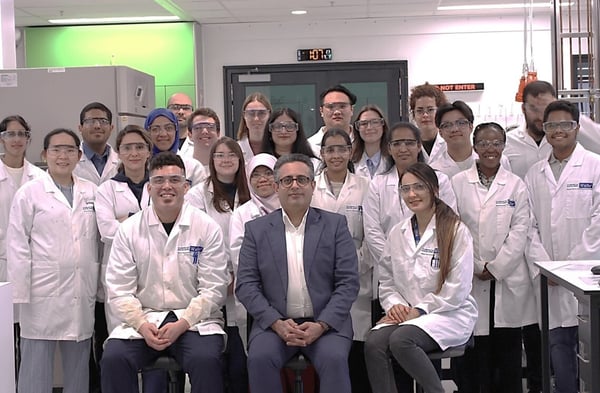
This project demonstrates how academic research can deliver practical, large-scale impact. Led by the University of Auckland’s Waste and Resource Recovery Research group (WaRe3), the programme focuses on turning complex waste challenges into solutions that councils and industry can confidently implement.
Over more than 15 years, WaRe3 has improved landfill gas capture, enabled new circular value chains, and reduced emissions at scale. Its work has cut landfill emissions by more than half at a major site while increasing renewable energy generation and supporting the recovery of difficult waste streams such as shells, batteries, and organic residues.
What sets the programme apart is its focus on usability. Each project produces clear designs, operating guidance, and decision tools, ensuring evidence leads directly to action. Through strong partnerships and rigorous research, WaRe3 is helping build a more resilient, low-waste future for Aotearoa.
Terre Nicholson Contaminated Land & Groundwater Management Emerging Professional of the Year
Winner
Charlotte Rayner – AECOM New Zealand

Charlotte Rayner is an Environmental Scientist who has quickly become a trusted advisor in contaminated land management. With strong technical capability and excellent client engagement skills, Charlotte consistently delivers work that improves environmental outcomes while avoiding unnecessary cost and waste.
Charlotte is nominated for her leadership in closed landfill compliance monitoring, where she identified that many discharge consents were no longer fit for purpose. By reviewing and updating consent conditions, she transformed monitoring from a tick-box exercise into a meaningful risk assessment tool, improving data quality and decision-making for councils.
Her impact extends to industry capability through conference presentations, mentoring junior staff, and enabling new approaches such as laboratory-based rapid screening for acid sulfate soils.
Charlotte’s work demonstrates how thoughtful, evidence-led practice can lift standards across contaminated land management.
Finalists
Sandra Hamler – SLR Consulting
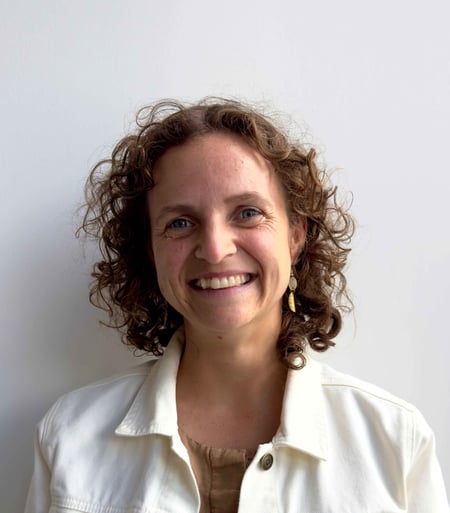
Sandra Hamler is a highly valued contaminated land consultant who delivers consistently high-quality fieldwork, reporting, and stakeholder coordination. Working across PSI, DSI, and acid sulfate soil investigations, Sandra demonstrates exceptional care, organisation, and technical rigour.
Sandra is nominated for her ability to support complex site investigations through meticulous planning, clear communication, and reliable data collection. Her work has reduced delays, avoided resampling, and supported cost-effective decision-making for clients operating in sensitive environments.
Beyond project delivery, Sandra actively shares knowledge through industry presentations, internal training, and mentoring. Her commitment to safety, sustainability, and practical learning is helping raise standards across contaminated land and groundwater management practice.
Oliver Tate – GHD

Oliver Tate is an emerging contaminated land professional known for his strong field leadership, analytical thinking, and commitment to sustainable outcomes. His experience spans complex infrastructure, defence, and mining-related projects, where he consistently supports responsible materials management.
Oliver is nominated for his contributions to major site investigations and soil disposal assessments, ensuring contaminated material is correctly classified and landfill capacity protected. His work on mine tailings reprocessing and water balance modelling demonstrates how environmental risk can be reduced while enabling resource recovery.
Through active involvement in ALGA’s Emerging Professionals SIG, mentoring students and graduates, and sharing technical insights via webinars and industry events, Oliver is helping build the next generation of contaminated land practitioners and strengthen sector-wide knowledge.
Waste and Resource Recovery Emerging Professional of the Year
Giulio Laura – Localised
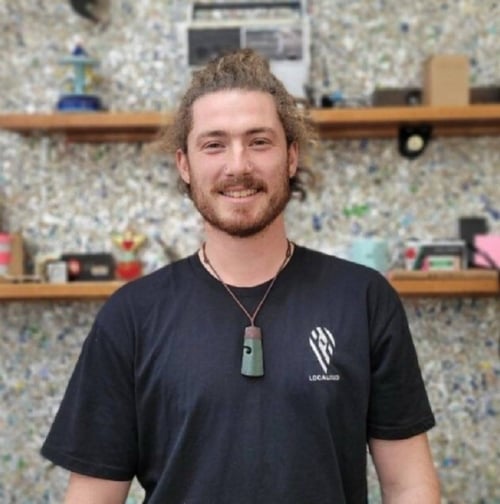
Giulio Lara is an emerging leader in community‑led waste and resource recovery, recognised for turning zero‑waste principles into practical, scalable outcomes that benefit communities and the environment. As manager of Localised’s flagship Tāmaki Zero Waste Hub, Giulio has played a key role in transforming reuse and recovery from an abstract goal into a reliable, everyday service that households, councils, and partners can depend on.
Under Giulio’s leadership, the Tāmaki site has more than doubled its team and redistributed over 500 tonnes of materials in a single year. A standout initiative has been his leadership of an oil heater stewardship programme, which introduced a safe, practical system for recovering waste oil and heaters. The initiative now diverts around 300 heaters each month, creates local employment, and generates additional site income—demonstrating how environmental and operational goals can align.
Giulio’s work reflects a strong commitment to people‑centred change, building capability within teams and ensuring sustainability is accessible, inclusive, and grounded in real‑world practice.
Finalists
Cam Edwards – 3R Group

Cam Edwards is an emerging professional transforming how data is used to drive real environmental outcomes. As Data and Insights Manager at 3R Group, Cam has been instrumental in the successful implementation of Tyrewise, New Zealand’s regulated product stewardship scheme for end‑of‑life tyres, at a critical stage of its national rollout.
Cam has led the development and continuous improvement of the Tyrewise digital platform, which tracks millions of tyres from collection through to processing. The system supports transparency, fraud prevention, route efficiency, and informed decision‑making for industry and government. By working directly with transporters, processors, and field teams, Cam ensured the platform performs in real‑world conditions, turning complex waste data into clear, actionable insight.
The impact of Cam’s work extends beyond Tyrewise. His reporting supports the Ministry for the Environment and Auto Stewardship New Zealand, while his approach to accessible, transparent data is lifting capability across the wider product stewardship landscape. Through industry presentations and knowledge sharing, Cam is helping demonstrate how strong data systems can enable better governance, behaviour change, and long‑term circular economy outcomes.
Steph Martin – The Repurpose Project

Steph Martin is an emerging leader working to shift construction and demolition waste practices through collaboration, trust, and practical action. Through The Repurpose Project, she works directly with builders, councils, suppliers, and waste operators to develop waste minimisation solutions that reflect the realities of construction sites and support meaningful change.
Steph is known for her ability to bring diverse stakeholders together. Through facilitated builder workshops, site visits, and industry consultation, she has helped builders make immediate, practical changes to how materials are managed on site. Her work with local government, particularly Waikato District Council, has supported industry‑informed waste actions and contributed to the development of a live plasterboard diversion trial, strengthening relationships between councils, builders, and recovery partners.
Rather than framing construction waste as a compliance or behavioural issue, Stephanie focuses on system design and shared responsibility. By translating insight into usable tools and fostering open, collaborative conversations, she is helping move construction waste from an accepted norm to a solvable challenge and supporting progress toward a more circular construction sector in Aotearoa New Zealand.
WasteMINZ + ALGA Legend
Winner
Michelle Begbie – Waikato Regional Council
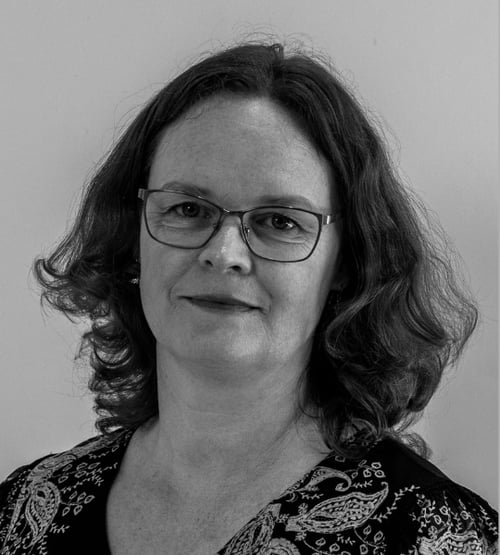
Michelle Begbie is widely respected across Aotearoa New Zealand and Australia for her leadership in contaminated land regulation and policy. As a senior regulatory practitioner, Michelle has played a pivotal role in bridging the gap between regulators, practitioners, and researchers, helping the sector navigate complex technical and policy challenges with clarity and balance.
Michelle is nominated for her long-standing commitment to advancing good risk management practice. She has led cross-Tasman conversations on mandatory reporting, supported regulator-only forums for ALGA, and represented Aotearoa internationally through the Common Forum initiative connecting environmental regulators across Europe and Australia. Her willingness to share regulatory insight has strengthened trust and understanding between regulators and industry.
Through webinars, conference sessions, and working groups with WasteMINZ, ALGA, and the CEnvP Scheme, Michelle has influenced policy discussions and supported better decision-making across the sector. Her impact lies not only in technical expertise but in her ability to connect people, translate science into practice, and leave a lasting legacy of shared knowledge and collaboration.
Finalists
Sam Willis – Alliance
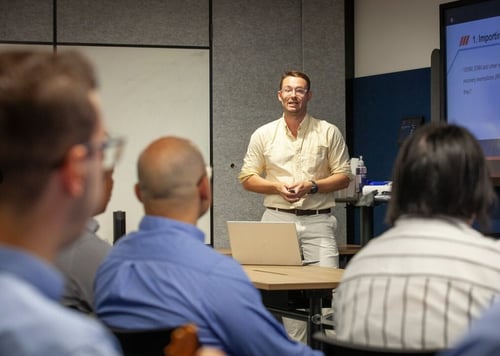
Sam Willis is recognised as a leader in vapour and gas risk assessment, known for challenging conventional approaches and promoting smarter, more sustainable decision-making. As Environmental Team Lead in Alliance’s Sydney branch, Sam combines deep technical expertise with a strong commitment to mentoring and industry service.
Sam is nominated for his tireless contribution to industry upskilling through ALGA. As Co-Chair of the Vapour and Gas Specialist Interest Group, he helped deliver major symposia, webinars, and training events that have lifted practitioner capability and encouraged the use of multiple lines of evidence in risk assessment. His presentations consistently advocate for proportionate responses that avoid unnecessary remediation and environmental harm.
Beyond formal roles, Sam is a passionate mentor who encourages emerging professionals to step into industry forums, events, and leadership opportunities. His impact is seen in stronger technical practice, better collaboration between government and consultants, and a more confident, sustainability-focused contaminated land sector.
Mark Roberts – Auckland Council
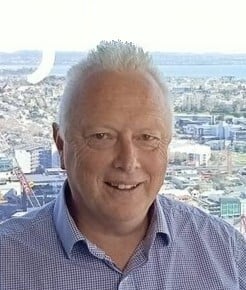
Mark Roberts is widely regarded as one of New Zealand’s most influential leaders in construction and demolition (C&D) waste minimisation. Through his role at Auckland Council, Mark has been a relentless advocate for practical, evidence-led change in how the sector approaches waste, reuse, and recovery.
Mark is nominated as a Legend in recognition of more than a decade of leadership that has shaped national thinking on C&D waste. He has initiated landmark research projects, chaired the WasteMINZ C&D Working group, and driven campaigns such as Construction Waste Week to raise awareness and inspire action. His work during storm recovery has embedded house relocation and deconstruction as preferred outcomes, delivering significant reuse and material recovery.
Mark’s impact reaches across government, industry, and the community. By connecting people, championing collaboration, and turning data into action, he has helped move C&D waste from a niche concern to a central part of New Zealand’s waste minimisation conversation.

Creating a future where people, communities and nature in Aotearoa New Zealand thrive together