



.jpg?width=300&name=ICAW%20-%20journey%20of%20composting%20(1).jpg)
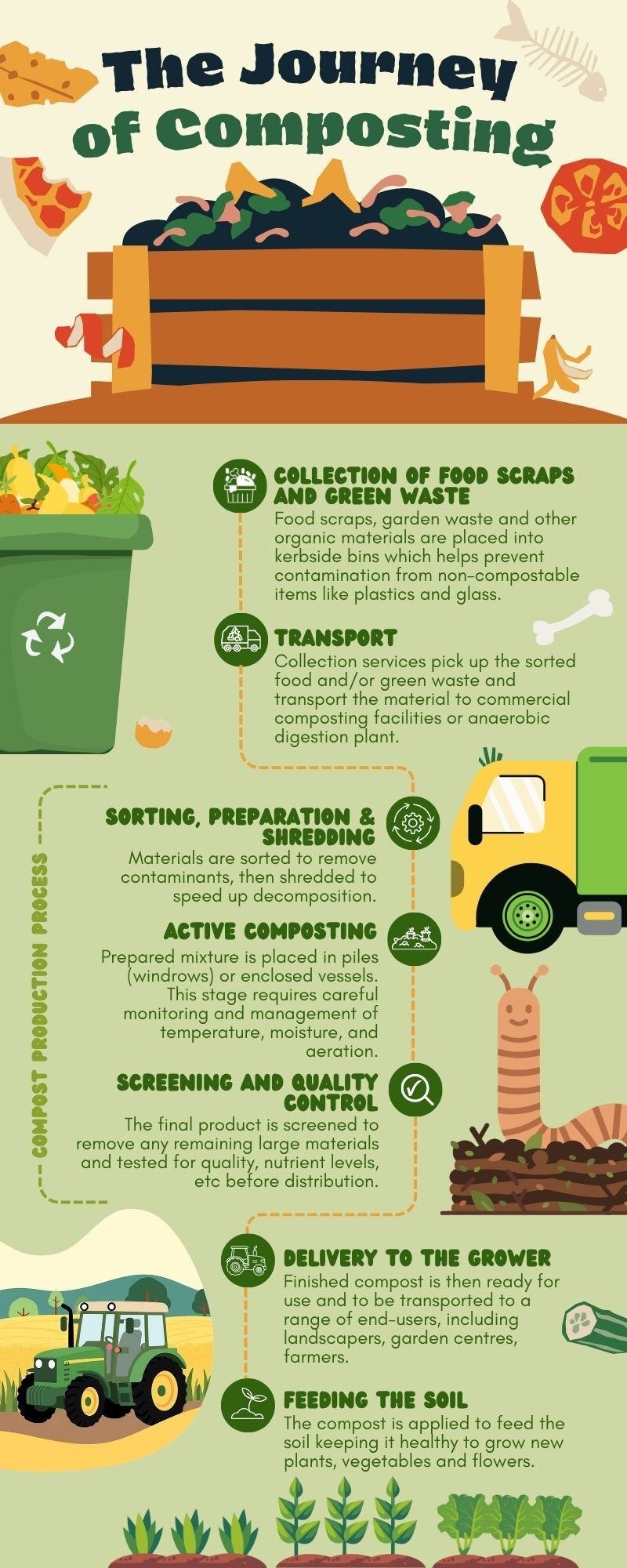
Before compost ever reaches a farm or garden (assuming you're not making it yourself), it has already been on a carefully managed journey. What begins as organic waste goes through a series of deliberate stages designed to transform it into a stable, high quality, nutrient‑rich product that will ultimately "feed the soil that feeds us".
From collection and sorting, through controlled composting and maturation, each step plays an important role in ensuring consistency, safety, and quality. Understanding this process helps growers and gardeners appreciate that good compost isn’t accidental—it’s the result of time, expertise, and careful management long before a single shovel touches the soil. Check out our infographic below for more information on the journey of composting.
Why growers use compost, why it matters and what are the benefits!
Improved Soil Health: Compost adds organic matter and a diverse soil biology health to the soil enhancing soil structure and fertility. In short it “feeds the soil” providing the foundation for healthy plant growth.
By adding organic matter, compost helps soil become looser, more balanced, and easier for roots to grow through. Over time, this improves soil structure, allowing air, water, and roots to move more freely.
Application of compost provides a steady supply of organic material that soil organisms can break down slowly. These organisms—like worms and beneficial microbes—turn compost into plant food. As these organisms thrive, they help with regenerating soils to become more resilient and better able to support crops year after year.
Nutrient Cycling: Compost provides a slow and steady release of nutrients to plants, reducing soil leaching and reliance on chemical fertilisers. Rather than delivering nutrients all at once, compost releases them slowly as soil organisms break it down.
By feeding soil life, compost helps nutrients stay in the soil reducing waste and building a more stable system where nutrients are recycled naturally. Growers often rely on compost because it feeds the soil first, allowing plants to grow stronger and more evenly over time.
Water Management: Increased organic matter in the soil helps to retain more water during dry periods and improves drainage during heavy rainfall. The benefits of this are water savings and improved soil resilience. For growers, this means healthier crops, fewer water related problems, and less need for irrigation.
Pest and Disease Suppression: Healthy soils supports the growth of stronger healthier plants that are more resistant to pests and diseases in turn leading to reduced need for chemical pesticides. Compost encourages beneficial microbes that compete with harmful organisms, helping reduce the risk of soil borne diseases naturally.
Plants grown in compost enriched soils often develop stronger root systems and experience less stress, making them less attractive to pests. This can reduce the need for chemical controls and support more balanced growing systems.
Environmental Impact: Aside from “feeding the soil” on the farm or in the garden, one of the most obvious benefits of composting is the diversion of organic material from landfill repurposing it into a valuable resource. By reducing the amount of organic material going to landfill it then reduces the amount of methane produced from its decomposition.
Healthier soils also mean less erosion, cleaner waterways, and more resilient landscapes. For growers focused on long term sustainability, compost is a simple and effective way to care for the land while maintaining productivity.
Compost is far more than a soil additive— it is a valuable resource that plays a key role in building healthy, productive, and regenerative growing systems. Compost helps soil function as a living system by improving soil structure, supporting natural nutrient cycling, managing water more effectively, and reducing pressure from pests and disease. Just as importantly, it plays a central role in soil regeneration, helping restore worn or depleted soils and rebuild long term fertility. With added environmental benefits such as waste reduction and improved soil resilience, compost allows growers to feed the soil, regenerate the land, and support strong, healthy plants and crops for years to come.