
This article is sponsored by the WasteMINZ + ALGA Platinum Partner, Tonkin + Taylor
In the waste and resource recovery sector, complex challenges call for more than single-discipline solutions. Real progress emerges when technical experts address community priorities, regulatory requirements align with cultural values, and innovative thinking is tested against practical realities.
At Tonkin + Taylor, we treat collaboration as more than a process requirement. We elevate projects beyond minimum standards to deliver lasting environmental and community benefits. By partnering with councils, operators, iwi/hapū, and project teams, we achieve better outcomes throughout the project lifecycle through genuine partnership.
The following case studies demonstrate what we accomplish when we embed collaboration from the start: we navigate complex technical and relationship challenges together, unite diverse perspectives to solve contaminated land issues, build regional capability through shared learning, and deliver climate-resilient solutions through innovative engagement.
Collaborating to build community support and positive outcomes - Wellington Southern Landfill
Wellington City Council set a clear vision to maximise resource recovery while meeting
future waste disposal needs. However, the Southern Landfill extension posed complex challenges. The site sits 2km from the active Wellington Fault; proposed discharges to Owhiro Stream resulted in non-compliance, and stakeholders initially adopted adversarial positions.
 By collaborating with Council to navigate technical and relationship challenges, we developed innovative solutions for seismic constraints and environmental requirements while Council led authentic community engagement. We lodged the application in March 2023, accompanied by 11 technical reports. The public notification process received only 14 submissions, six of which supported or conditionally supported our proposal. Landfill developments rarely gain this level of community support. The authority subsequently granted consent, securing Wellington’s future waste disposal needs while managing environmental and community needs.
A genuine partnership made the difference by combining technical excellence, strong project management, and community engagement. By bringing the local community on the journey and listening to and addressing their concerns, we achieved a positive outcome for all stakeholders, together.
Collaborating across cultural, technical and regulatory perspectives to solve complex challenges - Ōtaki to North of Levin: Te Pae o Tararua (Ō2NL)
On the Ōtaki to North of Levin: Te Pae o Tararua (Ō2NL) project, contaminated land
management wasn’t just a compliance exercise. It was central to delivering this major
infrastructure efficiently and sustainably. The project includes approximately 24 km of
new expressway, local road connections, bridges, interchanges, and extensive
earthworks. With a material deficit across the project, retaining and reusing suitable soil within the footprint was both a sustainability opportunity and a practical necessity.
Tonkin + Taylor developed a contaminated land approach tailored to the realities of the project, collaborating as part of the Southern Ō2NL Alliance and a wider project team including NZ Transport Agency Waka Kotahi, Muaūpoko Tribal Authority, local hapū of
Ngāti Raukawa te Au ki te Tonga, Horowhenua District Council, Horizons Regional
Council and other technical specialists. Instead of relying on generic criteria, the team .png?width=292&height=188&name=Soil%20(2).png) created project-specific, risk-based assessment criteria and soil management processes to support regulatory compliance while enabling pragmatic reuse decisions.
created project-specific, risk-based assessment criteria and soil management processes to support regulatory compliance while enabling pragmatic reuse decisions.
Early and ongoing engagement with iwi partners played a key role in the process, including during consenting, development of the pre-DSI CSMP, consideration of material reuse options, and consultation on managing unexpected contaminated material and determining the suitability of on-site containment locations.
The result is a framework that protects human health and the environment, reduces unnecessary disposal to landfill, and keeps valuable materials in the project. For large horizontal infrastructure projects, Ō2NL demonstrates what can be achieved when technical, regulatory, and cultural perspectives are brought together early to solve complex contaminated land challenges.
Collaborating to drive regional system change for waste - Waikato and Bay of Plenty
Delivering cost-effective waste and resource recovery services is more challenging as community expectations rise, regulations tighten, and budgets and assets are stretched. Councils must lift landfill diversion, reduce contamination, improve the customer experience, and invest in resilient infrastructure, often while managing complex contracts and ageing facilities.
As waste systems, suppliers, and customer behaviours cross district boundaries, councils can achieve better outcomes by collaborating regionally. Collaboration doesn’t remove local decision-making; it reduces duplication and aligns effort where it adds value.
Within the Waikato and Bay of Plenty, councils have been working together on a range of projects to align services and gain efficiencies, starting with shared information and collaborative research. Tonkin + Taylor (T+T) has supported councils throughout this process – providing research, analysis and facilitation to help build a shared-evidence base and identify system-wide opportunities. This has enabled larger initiatives such as the Circularising Organics Project, which is strengthening a more resilient organics system with benefits for soil health, emissions reduction, jobs, and community wellbeing. In 2025, T+T supported the Waikato and Bay of Plenty Regional Councils (with funding from the Ministry for the Environment) to develop a shared Cross Regional Waste Strategy. The Strategy now underpins the development of a waste infrastructure plan, with input from councils, industry, iwi/Māori, and community organisations. The plan helps councils align local and regional direction and prioritise value-for-money investment, with early opportunities identified, including regional resource recovery parks and enhanced resource recovery centre networks.
Collaborating to streamline climate solutions - Auckland's Closed Landfills
Auckland Council's Closed Landfills Team is leading climate adaptation through strong partnerships across the city's closed landfill portfolio. The Motions Meola and Taipari Strand Closed Landfill climate resiliency projects aim to protect vulnerable coastal landfill sites from erosion and storm damage. These projects also improve the long-term resilience of public open spaces.
These projects highlight effective collaboration between Auckland Council and its consultants, replacing lengthy reports with interactive workshops to streamline the design process and enhance delivery. Tonkin + Taylor has worked with the team throughout the process to achieve expected outcomes that include improved shoreline stability through new rock revetments, storm-tide-level bunds, and salt-tolerant plantings, while enhancing site accessibility and reducing maintenance costs.
The Whangateau Closed Landfill Adaptive Planning Report builds on this collaborative approach. It uses the Dynamic Adaptive Planning Pathway (DAPP) framework to guide flexible long-term decision-making for climate risks. Developed through workshops, the adaptation plan identifies thresholds, signals, and triggers that indicate when Auckland Council must take action.
Together, these partnerships show how collaboration within Council, between consultants, and across technical disciplines drives innovation. This approach enables climate-resilient closed landfill management across Auckland and shows that how we engage matters as much as the technical content.
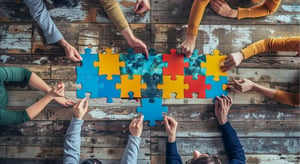
These projects share a common thread. They succeed because diverse expertise, perspectives and priorities are brought together early and genuinely valued throughout. In waste and resource recovery, that's not just good practice; it's essential to achieving better outcomes.