



Reclaiming Resources: Optimising Soil Reuse
Background
Healthy soil nurtures life, preserves ecosystems, and helps our natural world flourish – but in Aotearoa New Zealand, we continue to treat it like waste.
Every year, New Zealand loses billions of dollars through wasteful soil practices. Inefficient handling and disposal of this finite resource creates direct financial pressures for infrastructure projects and developers, while also imposing hidden costs on our environment – including unnecessary emissions from transport, depletion of landfill capacity, pressure on roading networks, and the irreversible loss of valuable soil materials.
Soil from construction, developments, and earthworks is often sent to landfill, with 4.5 - 7.5 million tonnes of soil estimated to end up in landfills and cleanfills every year. The cost to dispose of this significant volume of soils roughly equates to $1.35B - $2.25B – every year.
Without change, these practices will continue to constrain New Zealand’s growth, infrastructure delivery, and resilience.
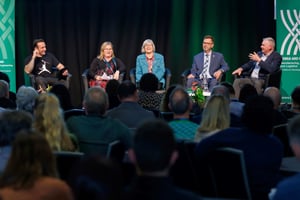
WasteMINZ has been advocating for the development and implementation of a framework to optimise soil reuse. This work started with a specific workshop run during the annual WasteMINZ conference in 2024 on soil reuse, which led to the development of a white paper being released in November 2024.
In August 2025, the Ministry for the Environment confirmed its support towards the first phase of the development of a nationwide soil surplus framework.
This first phase has now been completed with the delivery of the 'Reclaiming Our Resources: Optimising Soil Reuse in Infrastructure and Land Development' report
About the project
The Ministry for the Environment has provided $150,000 of funding to support the first phase of the development of a nationwide framework that optimises the reuse of soils, rather than treating it like waste.
This funding has allowed WasteMINZ to:
- develop a vision for surplus soil management;
- analyse the issues involved; and
- develop recommendations on 3-5 priority actions to progress a framework for Aotearoa New Zealand.
The project aimed to address the many reasons why soil is sent straight to landfill, such as lack of available space on the project site, perceived liability concerns, advice from consultants, regulatory interpretation/requirements, risk of construction programme delay, and geotechnical and ground contamination constraints.
The project group has worked with stakeholders and the wider sector at each step of the project to ensure that everyone’s perspectives and knowledge is incorporated into work that impacts a significant number of sectors and stakeholders.
Project group members
WasteMINZ approached a subgroup of the authors of the soil reuse white paper that was published in November 2024. This has resulted in the following people being contracted to deliver the above:
- Rod Lidgard (Pattle Delamore Partners and Project Group Chair)
- David Duncan (Fulton Hogan)
- Sarah Newall (HAIL Environmental)
- Tim Dee (Jacobs)
Bruce Croucher represented the Ministry for the Environment on the project group.
Joshua Evans (Waikato Regional Council), has advised the project group on matters of importance to the regulators, supporting the gap and barriers analysis part of the project and acting as a conjugate between the project group and the regulators special interest group.
.jpg?width=500&height=400&name=Project%20Group%20Soil%20Reuse%20(4).jpg)
Project timeline
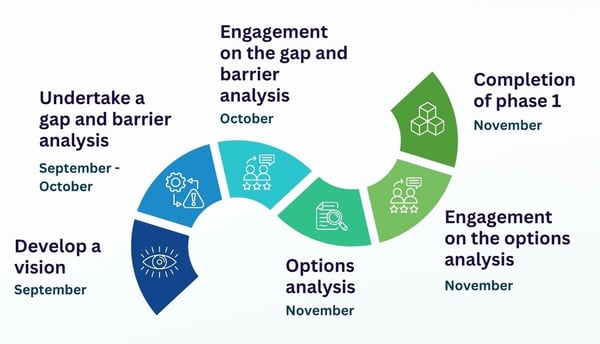
The project timeline below outlines the various phases of the project.
- September 2025: A high-level vision for surplus soil management was drafted by the project group and circulated for consultation. Consultation on the vision statement closed on Monday 15 September. The project group thereafter reviewed the feedback received, and submitted it to the Ministry for the Environment on 19 September. Please click here to read the vision statement.
- October 2025: An analysis of the current gaps across the investment/infrastructure, policy, behaviour change/guidance areas of soil management practices is being undertaken and drivers of the generation and waste of surplus soils are identified.
- November 2025: An options analysis was undertaken detailing some priority actions and matters to be included/addressed by a strategic framework.
- December 2025: The project report was completed and submitted to the Minister for the Environment.
- February 2026: The project report was published and finalised.


Creating a future where people, communities and nature in Aotearoa New Zealand thrive together