



 What have the Contaminated Land Management Sector Group Steering Committee been up to, and what are the key issues for the sector? Steering Committee Chair James Corbett explains below.
Key activities:
Soil reuse
One of the committee’s major focus areas has been soil reuse. At the 2026 Conference, the Minister for the Environment, Nicola Grigg’s keynote address and the Ministry's work programme confirmed a commitment to advancing the first three priorities identified in the soil reuse report. These priorities include undertaking a national soil market assessment with regional perspectives, carrying out a legislative review, and developing a soil management framework. An advisory group has been established, bringing together representatives from the Ministry of Cities, Environment, Regions and Transport (MCERT), WasteMINZ, and industry stakeholders. Additional efforts are also underway to strengthen engagement with the development sector. To support collaboration and coordinated advocacy, WasteMINZ and Civil Contractors New Zealand have developed a Memorandum of Understanding.
Conference 2026
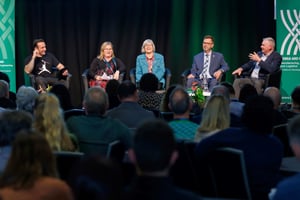
The first joint conference with ALGA was another significant achievement. The event was considered a success and demonstrated strong collaboration between the two organisations. Highlights included a keynote presentation from Dr Nick Kim and a well-attended contaminated land and groundwater management workshop. The popularity of the Women in Industry breakfast also indicated strong demand for similar events in the future. Presentation materials from the conference have been made available online, and planning is already underway to make next year’s conference even bigger and better by incorporating participant feedback.
Submissions
The sector group steering committee has been active in submissions and stakeholder engagement. Work is ongoing with health and safety expert Mike Cosman on an asbestos sector review, although the completion date for the report is yet to be confirmed. In addition, the sector group met with MCERT on 27 July to discuss successes and potential improvements to the Contaminated Sites and Vulnerable Landfills Fund. These discussions may lead to significant changes in the future. The group is also monitoring and engaging with the ongoing Resource Management Act (RMA) reform process.
The key challenges facing the sector
Several key challenges currently face the contaminated land management sector. These include adapting to changes within government ministries, particularly establishing new relationships with MCERT, as well as responding to legislative reforms affecting the RMA and local government functions and responsibilities. Governance changes at both local and central government levels, including upcoming elections, also present uncertainty. Other challenges include limited time and opportunities for engagement, funding constraints, and the need for stronger collaboration with related industries such as development, civil works, and construction.
What the sector group is doing to address these challenges
To address these challenges, the sector group is encouraging greater engagement between MCERT and the CLM sector, including opportunities for ministry representatives to present to industry through webinars. Members are being supported through submission opportunities and working groups focused on legislative matters. The committee is also maintaining an open-door approach, encouraging members to raise issues, request responses, and participate through communications and webinars. Efforts are being made to streamline communications by reducing email volume and focusing on key issues through the Circular newsletter. Funding partnerships for future work streams are also being explored, alongside stronger relationships with ALGA, Civil Contractors New Zealand, and other organisations.
Broader issues facing the sector group
The sector group continues to operate in a challenging environment, with many members having limited time and resources which can limit their ability to become involved in sector initiatives. Progress can also be slowed by the government's limited responsiveness, changing priorities, and staff turnover. At the same time, the pace of change remains high, particularly when organisations are required to prepare submissions within increasingly tight deadlines. These factors continue to shape the work and priorities of the CLM Sector Group Steering Committee.