WasteMINZ is reviewing the way our sector groups are structured, so that the work we do together is targeted, focused on the right issues, and aligns with our WasteMINZ strategy.
Our industry has changed significantly since we first established in 1989, and we need to adjust the way we work to reflect these changes. We haven’t reviewed our sector group programme since it was created in 2006, and now is the time.
We are consulting with you, our members, on the proposed model.
Why are we doing this?
Our members do amazing work, but we need to prioritise the work that will have the most significant impact on our industry, whilst also aligning with the WasteMINZ strategy. The way we currently work is resource-heavy for the WasteMINZ team and doesn’t allow us to pivot to the industry’s needs.
The way our sector groups are structured doesn’t give us maximum impact for the amount of time our members voluntarily invest. We want to make sure that those who volunteer their time for the benefit of the wider industry are using their time wisely.
We’ve had member feedback that you would like to look at different ways of working, while also ensuring WasteMINZ operates more effectively for the benefit of the industry.
Do members have a say in this?
Members play a central role in shaping the final structure: Your feedback will directly influence the outcome.
We are committed to a transparent consultation process with clear information, open communication, and multiple opportunities for members to have their say, including:
- A member survey
- Member webinars with Q & A
- Focus groups to delve more into the details.
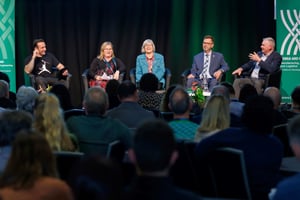
We are hosting two webinars with Q&A throughout the consultation period. Register below:
Available only for WasteMINZ members.
What does the current sector group programme look like?
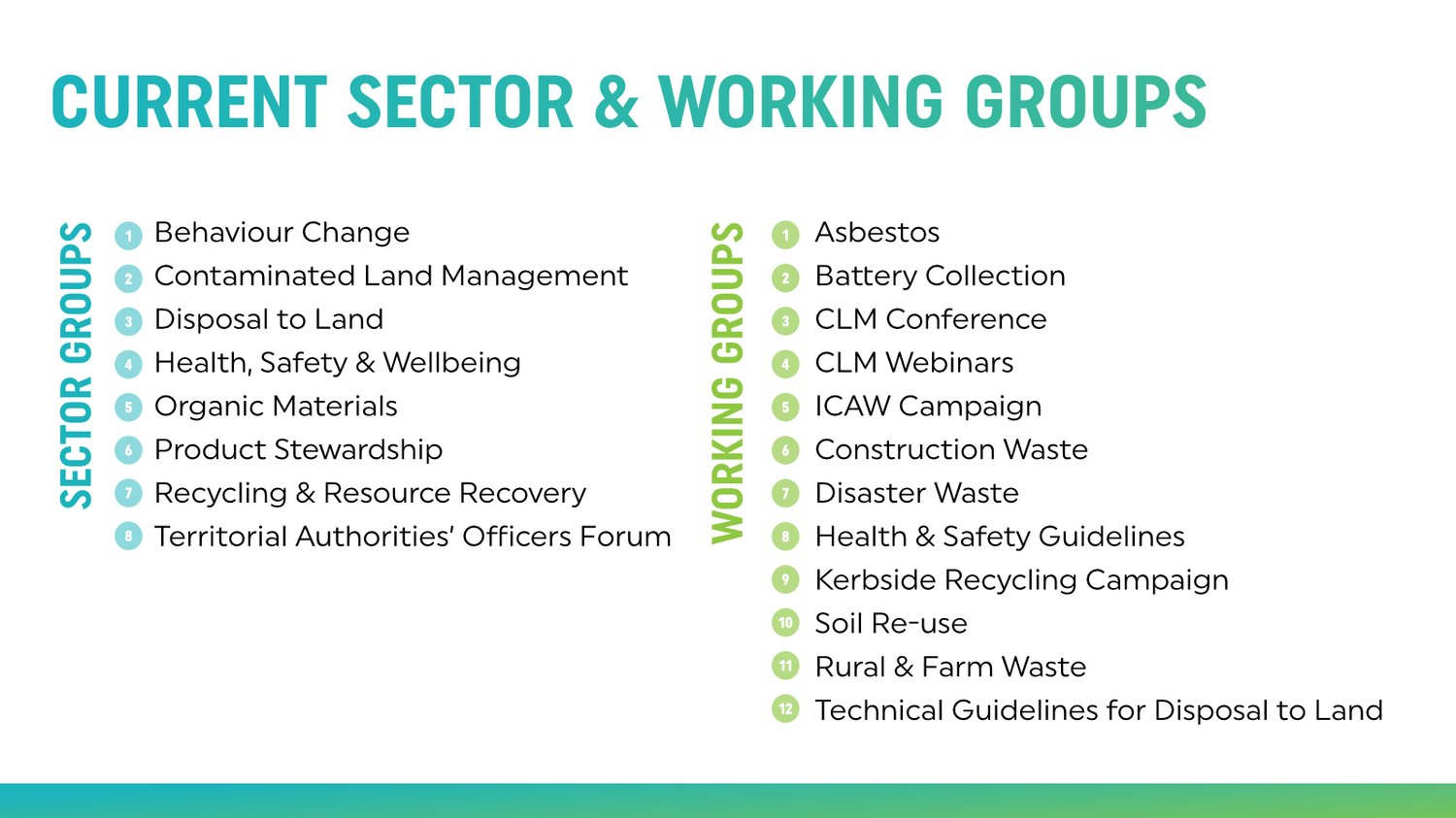
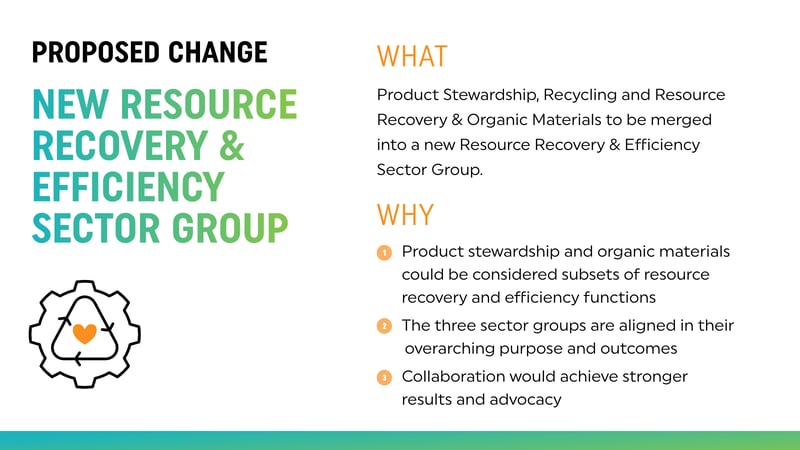
We are proposing to merge three sector groups into a new Resource Recovery & Efficiency Sector Group:
-
Product Stewardship
-
Recycling and Resource Recovery
-
Organic Materials
Why: These three sector groups are aligned in their overarching purpose and outcomes and frequently work together on their projects and submissions. We view Product Stewardship and Organic Materials as subsets of resource recovery and consider it more effective for the three groups to work together.
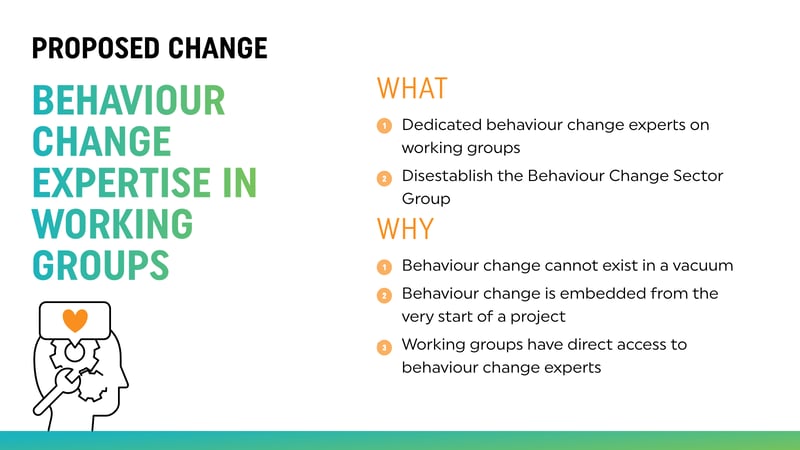
We are proposing to disestablish the Behaviour Change Sector Group and instead have a seat on relevant working groups for a behaviour change expert.
Why: Behaviour change cannot exist in a vacuum. We want to ensure that the behaviour change expertise within our membership is recognised and is used effectively. By allocating spaces to working groups, which will be responsible for undertaking the work driven by steering committees, our working groups will be given practical, timely, behaviour change advice.
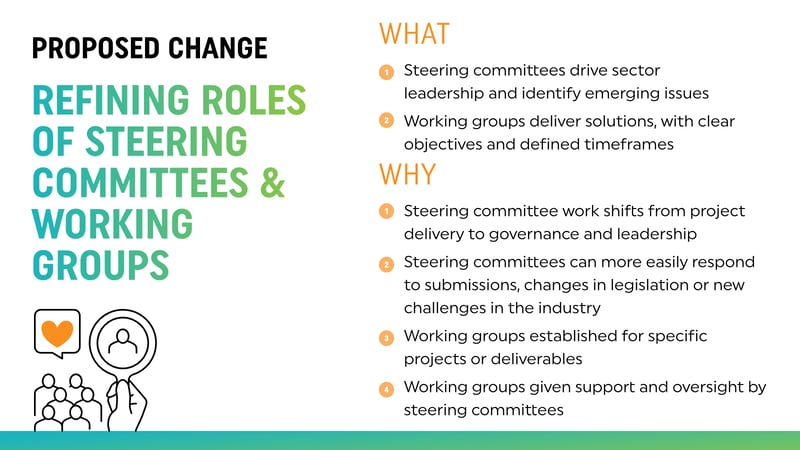
Under this proposal, steering committees will drive the direction of the work the sector group does by identifying issues in the sector and overseeing the working groups that develop and deliver solutions. This differs from the current way of working, where steering committees identify issues and progress solutions themselves, which can be challenging and time consuming.
Why: Steering committees will be able to focus on their strengths – setting direction for the sector group, quickly and effectively responding to submissions and changes in legislation/new challenges in the industry, and identifying key issues and opportunities, rather than delivering solutions (that would be left to the working groups).
Working groups will be given support and oversight by the steering committee, as well as clear direction; specific outcomes and deliverables; and a timeline to work towards.
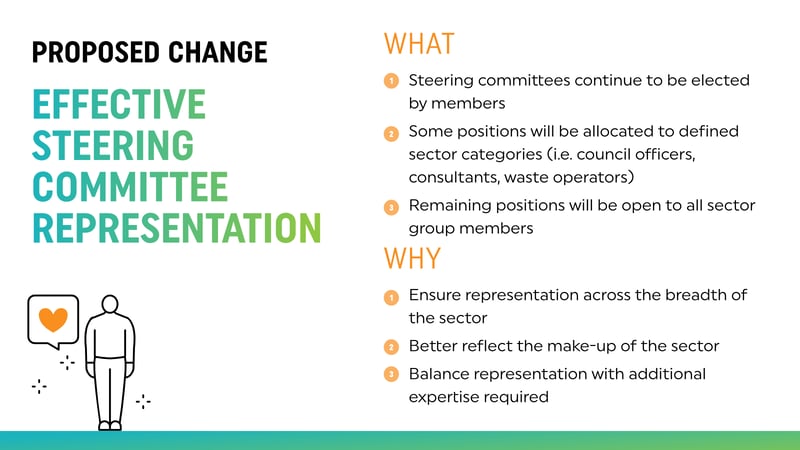
Under this proposal, steering committees will continue to be elected by members of the sector groups. However, we are proposing that seats are allocated to specific sector categories (e.g., community, operators, regulators, infrastructure, consultants) to genuinely reflect the breadth and diversity of the sector, and the skills required. Some seats would remain open, allowing any member to stand for election. This would maintain flexibility for wider participation and bring additional voices, perspectives, and expertise onto the committee.
Why: This will help to ensure balanced representation of the industry across the steering committees and more informed decision making.
The core purpose of sector groups will remain unchanged: Driving the activities of WasteMINZ and helping to deliver member-led initiatives to improve and advance the waste, resource recovery and contaminated land management sectors across Aotearoa New Zealand.
-
Member involvement will still be key to these sector groups. Members are the experts and have the best insight into the issues and challenges facing our industry.
-
Steering committee members will continue to be elected into their positions.
-
Working groups can include both members and non-members.
-
Steering committee size remains the same (maximum of 10 people) and term remains 2 years.
Consultation process
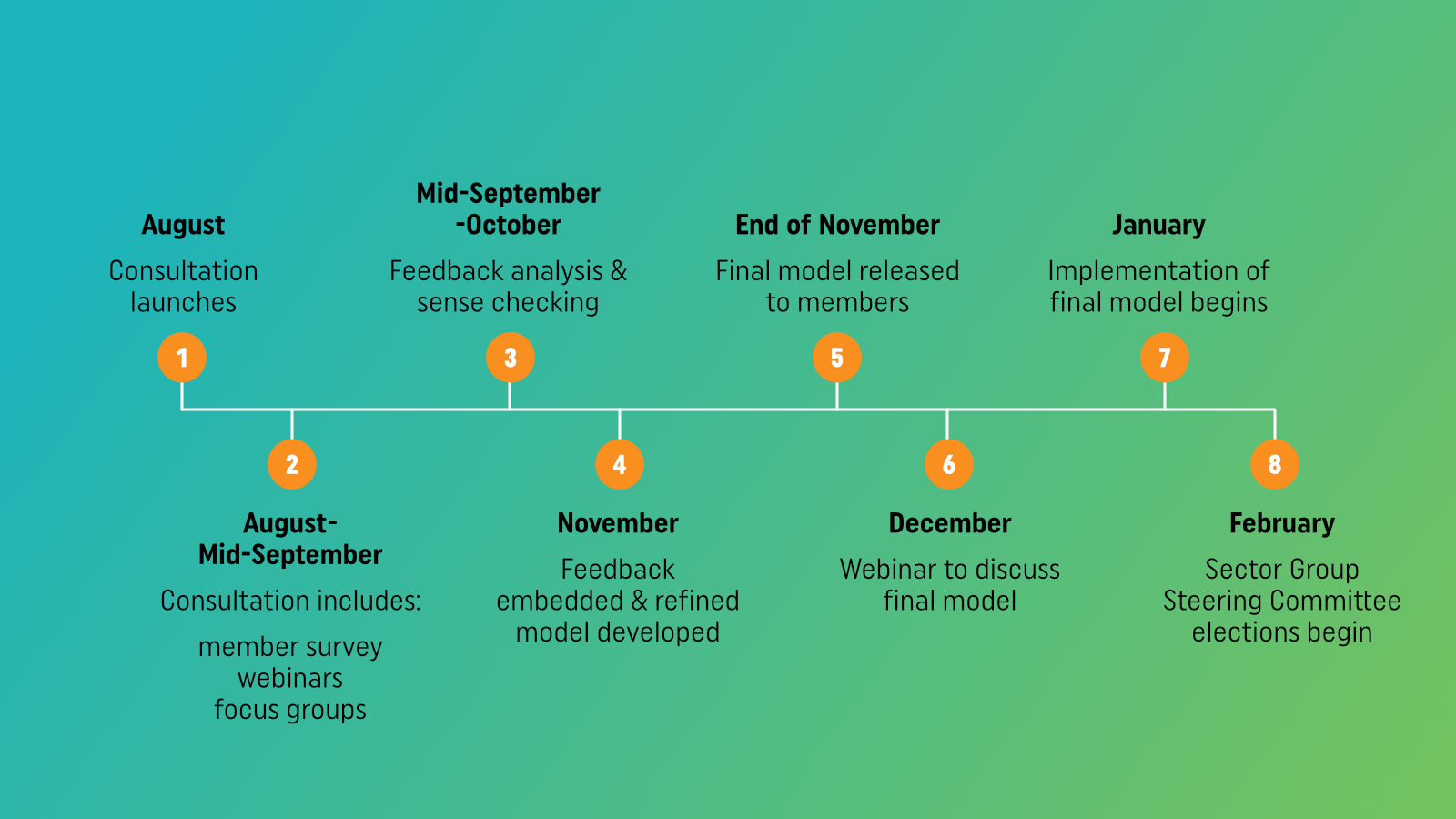
The consultation will be open for approximately 6 weeks, with multiple opportunities for members to have their say, including:
-
A member survey
-
Webinars with Q & As
- Focus groups with key stakeholders and members to delve more into the details (participants will be contacted by WasteMINZ or a representative of WasteMINZ)
Yes! The purpose of this consultation is to understand if this proposal is fit for purpose for you, our members. Nothing is set in stone, and we will be analysing and embedding your feedback before developing a final model.
These changes are being proposed with our members and industry in mind. We believe changing the way we work will make WasteMINZ membership more valuable for you, because our team will be more efficient and we will be able to focus our resources on the work that matters most to you and the rest of the industry.
Yes, we believe it will lead to stronger advocacy. We believe the changes will ensure we are focusing on the priorities that make the most sense and will make the most difference to the industry.
We will take all feedback into consideration and ensure that our decision is based on what our members and our industry need and want. If members tell us that this isn’t what they want, then we will step back and take another look at the proposal.
Steering committees and working groups
Yes. Ensuring fair representation and a strong voice for all parts of the industry would be an important part of the proposed Resource Recovery & Efficiency Sector Group. While it is being proposed that Product Stewardship, Recycling and Resource Recovery, and Organic Materials should be brought together because of their closely aligned goals and frequent collaboration, we recognise that each area has its own perspectives, expertise, and priorities.
To reflect this, the proposed new structure would include mechanisms, such as allocated steering committee seats and open positions, to ensure representation from across the different parts of the industry. This approach is designed to maintain visibility and influence for each area, while also enabling more coordinated, effective work on shared issues.
Our steering committee elections were due to be held in August 2026. As this consultation is being run during that time, we have pushed the elections out until early next year. We have requested our current steering committee members to continue in their roles until the election process is completed.
Steering committees
Steering committees are responsible for setting the direction and priorities of the sector group, including identifying key issues and opportunities, and overseeing the work programme.
Steering committees are elected by the wider sector group members to represent the sector.
Working groups
Working groups are responsible for delivering specific pieces of work. They are formed to address defined issues or projects, and operate with clear objectives, timelines, deliverables and defined end date set by the steering committee. Working groups are temporary in nature and are disbanded once their agreed outcomes have been delivered or their purpose has been fulfilled.
Working groups would be formed by members submitting an expression of interest. In some cases, steering committee members may co-opt subject matter experts on to a working group if they aren’t represented in the expressions of interest.
Under the proposal, elections for the steering committee members will remain, however, a portion of seats will be allocated to specific sector categories (e.g., community, operators, regulators, infrastructure, consultants) to ensure the committees genuinely reflect the breadth, diversity, and skills required across the industry. These categories will be tailored to each steering committee based on its purpose - for example, the Disposal to Land Steering Committee could include allocated seats for:
- Landfill operators
- Relevant councils
- Waste collectors
- Environmental consultants
We would develop the make-up of the allocated positions with the help of our current steering committees.
Importantly, allocated positions would not make up the entire committee. Some seats would remain open, allowing any member to stand for election. This would maintain flexibility for wider participation and bring additional voices, perspectives, and expertise onto the committee.
Working groups will be formed based on the priorities set by the steering committees. Members and non-members will be able to join working groups either through an expression of interest process or by contributing relevant subject matter expertise. Participation will be open to all WasteMINZ members, and non-members, ensuring that working groups draw on the breadth of knowledge and experience across the industry.
Yes. Members will be able to participate in both a steering committee and one or more working groups. This will allow for strong connections between strategic direction and delivery, while still maintaining clear roles between oversight and implementation.
Under this proposal, the size of steering committees or length of term will not change. Steering committees will remain as a maximum of 10 members, with a term of two years.
Yes, we expect that our steering committees will still hold quarterly meetings throughout this process.
Our steering committees and working groups will continue as usual throughout this process.