

Skip to content

EVENTS CALENDAR

WasteMINZ regularly hosts events designed to connect members and improve the overall knowledge across the sectors.

Learn more →

CONFERENCE

Join us at the industry event of the year to delve into these topics and learn how to best advocate for your sector and become a change-maker.

Learn more →

WEBINARS

Our webinars are thoughtfully designed to bring members together, providing valuable insights and opportunities for professional growth

Learn more →

Political panel-1

WORKSHOPS & NETWORKING

We run workshops, networking and other events for our members to learn, network and connect with each other.

Learn more →

MEMBERSHIP OPTIONS

With over 1500 members ranging from small operators through to councils and large companies.

Learn more →

OUR MEMBERS

Our members represent a broad cross section of the industry, from small operators through to councils.

Learn more →

MEMBERSHIP DIRECTORY

Find out more about our members in our Membership Directory

Learn more →

Mega Image

MENTORSHIP PROGRAMME


Connecting Aotearoa New Zealand’s waste, resource recovery and contaminated land management professionals

Learn more → 


PROPOSED SECTOR GROUP REALIGNMENT

WasteMINZ is consulting on a proposed realignment of our sector group. We are asking WasteMINZ members for their feedback on the proposed changes.

Learn more →

OUR GUIDELINES

WasteMINZ has produced guidelines to provide best practice advice to the waste industry, producers, consumers and advertisers.

Learn more →

OUR PROJECTS

Learn more about the significant projects WasteMINZ is working on, including soil reuse, battery disposal and more, and find educational info and resources. 

Learn more →

expo network
SECTOR GROUPS


Read about the work our Sector Groups and Working Groups do, and how they are structured. 
 

Welcome

Sector programme graphics (7)
Overview
A new way of working
How the model will work
Next steps
FAQs
Submit your questions
Sector programme graphics (3)


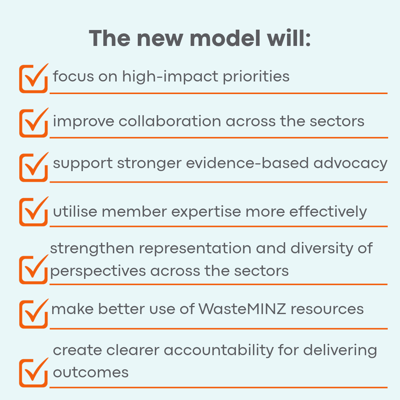
Our members have told us they want an organisation that is responsive and focused on achieving meaningful outcomes for the sector. They want their expertise used where it can have the greatest impact, and they want WasteMINZ to focus its resources on work that matters most.

Following extensive member consultation, WasteMINZ is introducing a new sector programme model, which positions WasteMINZ to advocate for and progress impactful projects for our members, while still creating opportunities for members to connect, collaborate and share expertise.
Sector programme graphics (8)


Why are we changing?

The sector group programme has served members well for decades, but the industry has changed significantly since WasteMINZ was established in 1989. 

Today's challenges are more complex, more interconnected and require greater collaboration. The existing structure has become increasingly resource-intensive and can make it difficult to respond quickly to emerging priorities. 

We need to prioritise the work that will have the greatest impact on our industry, whilst also aligning with the WasteMINZ strategy.
Sector programme graphics (5)

What has happened so far?

Earlier this year, we consulted with our members on four key proposed changes to our sector programme via:

  • A member survey
  • Webinars with Q & A
  • Focus groups.

The new model is shaped directly by that feedback and looks slightly different to the original proposal, which you can see here.

The updates include changes to the names and remits of some sector groups, the introduction of new Communities of Practice to allow for connection and collaboration, and the development of a new cross-sector priority-setting process. 

Thank you to everyone who took the time to share their feedback.

The new sector programme is designed to ensure WasteMINZ members and staff spend more time focusing on the work that matters most.

  • Sector Group Steering Committees will focus on strategic priorities

    Steering committees will identify emerging issues and priorities, provide expert advice on submissions and oversee the deliverables of working groups. 

  • Working groups will deliver outcomes

    Working groups will take on specific projects with clear objectives, deliverables and timeframes, and be accountable to a steering committee or the Cross-sector Leadership Forum. 

  • Communities of Practice will build connections and provide opportunity for knowledge sharing

    Communities of Practice will provide member-led spaces for networking, and collaboration, enabling members to share practical experiences, explore emerging issues, and learn from one another. 

  • A Cross-sector Leadership Forum will coordinate priorities
    Chairs and Deputy Chairs from all steering committees will work together to identify sector groups’ shared priorities, strengthen cross-sector collaboration, bring a systems perspective to issues that affect our sectors, and provide input into organisation-wide initiatives such as advocacy and external engagement.

  • The number of Sector Groups will be reduced
    We will have four sector groups, each focused on the outcomes we need to achieve, rather than on specific material streams. 

  • Steering Committees will reflect the diversity of their membership
    Steering Committees will have reserved seats for specific sector categories to strengthen decision-making and sector leadership. 

Our new sector groups

CE SG
CLM SG
LG SG
residual waste

How the model will work

Separating governance from delivery

Governance

What is changing?

Steering Committees will focus on identifying issues, setting priorities and guiding the direction of their sector group.

Working Groups will develop and deliver solutions. They will be established with a clear purpose, agreed outcomes and a defined timeframe.

This differs from the current model, where Steering Committees identify issues and undertake the work needed to address them.

A Steering Committee representative will sit on each Working Group, to provide context on why the project was initiated, highlight key risks and challenges, and identify any scope creep or drift. They will also take a more active role where necessary.

Why are we making this change?

Steering committees will be able to focus on setting direction for the sector group, quickly and effectively responding to submissions and changes in legislation/new challenges in the industry, and identifying key issues and opportunities, rather than delivering solutions.

At the same time, Working Groups can focus on delivering outcomes, with clear direction and support from the Steering Committee.

Introducing Communities of Practice CoP

What is changing?

We will establish five Communities of Practice (COPs) on a 12-month trial:

  • Behaviour Change
  • Organic Materials
  • Health, Safety & Wellbeing
  • Construction Waste
  • Small battery management

COPs are member-led groups that provide a regular forum for connecting, discussing emerging trends, identifying challenges, sharing lessons learned, and exploring opportunities for collaboration.

COPs are intentionally informal and member-driven. The WasteMINZ team will schedule meetings and the COP Chair and Deputy Chair will develop the agenda, lead discussions, and capture any meeting outcomes or actions.

COPs are open only to WasteMINZ members.

Why are we making this change?

We know that many members want more opportunities to engage with peers, share ideas, learn from others, and stay informed about developments in their area of interest.

COPs are designed to meet this need by creating regular opportunities for discussion and networking, while helping to strengthen connections across the sector.

COPs do not make formal decisions or deliver projects. They provide technical advice to Steering Committees and help identify emerging issues, trends and opportunities. Where further work is required, the Steering Committee can decide whether a dedicated Working Group should be established, but this must be approved by WasteMINZ.
Creating a Circular Economy Sector Group

CoP (3)

What is changing?

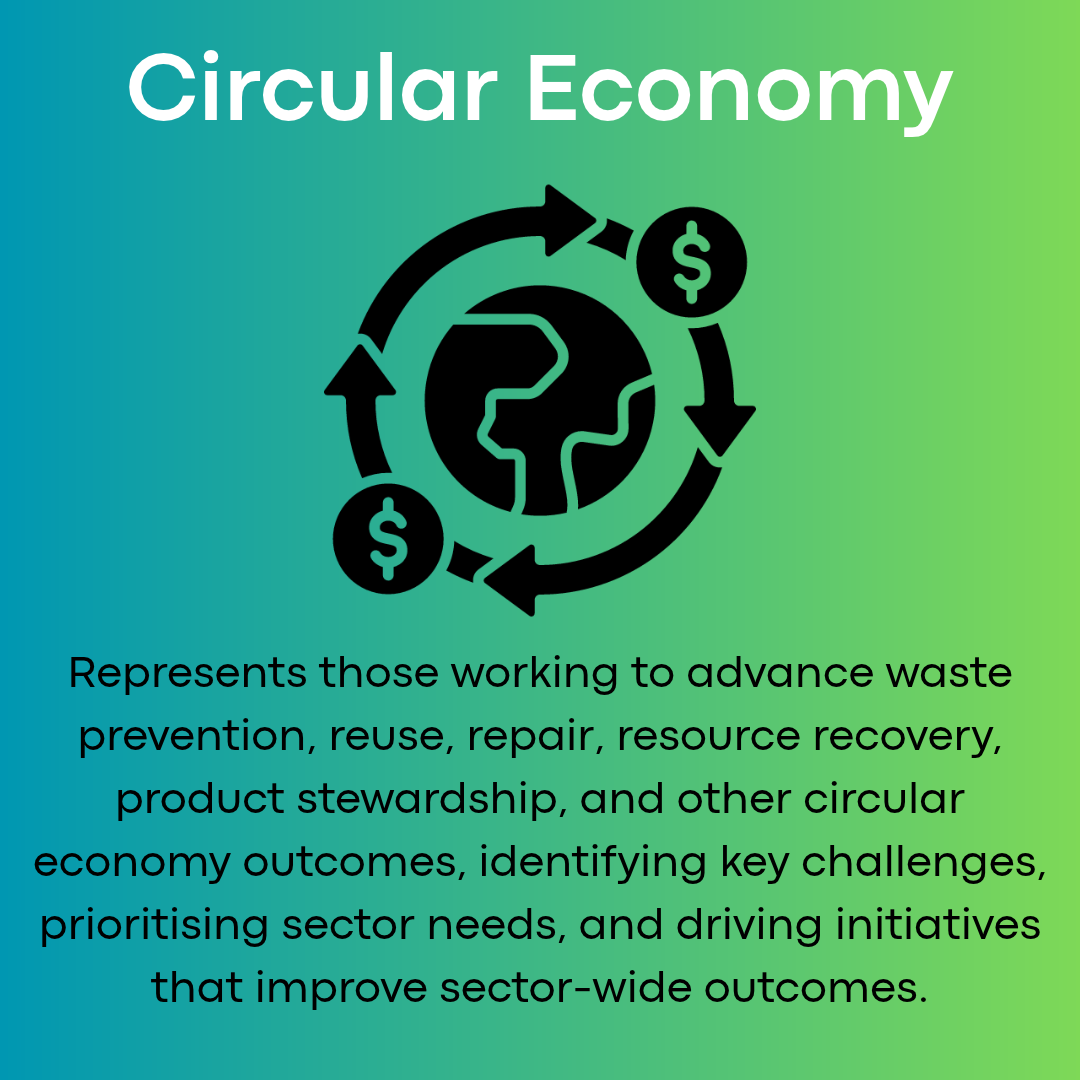
The Product Stewardship, Recycling & Resource Recovery, and Organic Materials sector groups will be combined into a new Circular Economy Sector Group.

The Circular Economy Sector Group represents those working to advance waste prevention, reuse, repair, resource recovery, product stewardship, and other circular economy outcomes, identifying key challenges, prioritising sector needs, and driving initiatives that improve sector-wide outcomes.

Why are we making this change?

Many of the opportunities and challenges faced by these three sector groups are closely connected. Bringing these areas together encourages more joined-up thinking and helps ensure effort is focused where it can achieve the greatest benefit.
Reframing sector groups to reflect the future of the sector CoP (4)

What is changing?

We are updating the scope and focus of two sector groups:

  • The Territorial Authorities' Officers Forum will be renamed Local Government. The Local Government Sector Group will remain focused on waste minimisation and resource recovery but expand its membership to include regional council officers working in this space.

  • The Disposal to Land Sector Group will be renamed to Residual Waste Management, and its focus will be managing waste that requires final disposal after all reasonable opportunities for reduction, reuse, recycling and resource recovery have been considered.

Why are we making this change?

These changes ensure our sector groups better reflect the makeup of our membership and the direction of the sector.

The expanded Local Government Sector Group recognises that regional councils play an increasingly important role in waste minimisation and resource recovery. Bringing territorial authorities and regional councils together will create stronger opportunities for collaboration, knowledge sharing and alignment on shared challenges and priorities. Importantly, the group's core focus on advancing waste minimisation and resource recovery outcomes will remain unchanged.

The Residual Waste Management Sector Group recognises that residual waste can be treated in a variety of ways.

Updating these groups helps ensure our structure reflects current industry priorities and supports more effective collaboration across the sector.

Embedding behaviour change expertise across projects

CoP (5)

What is changing?
The Behaviour Change Sector Group will be disestablished. Instead, behaviour change specialists will part of relevant Working Groups, where they can provide advice and support on specific projects.

A Behaviour Change Community of Practice will also be established to provide opportunities for networking, knowledge sharing and collaboration. It will also provide an avenue for members to participate in Working Group projects and advise Steering Committees on behaviour change approaches and initiatives.

Why are we making this change?
Behaviour change cannot exist in a vacuum. Rather than operating separately, this expertise should be available when projects are being planned and delivered.
This approach ensures behaviour change advice is provided where it can have the greatest influence on outcomes.
Embedding health, safety and wellbeing across WasteMINZ's work

CoP (6)

What is changing?

The Health, Safety & Wellbeing Sector Group will be disestablished. Health, safety and wellbeing expertise will instead be represented across Steering Committees through the election process. A Health, Safety & Wellbeing Community of Practice will also be formed.

Why are we making this change?

As with Behaviour Change, health, safety and wellbeing do not exist in a vacuum.

To date, our Health, Safety & Wellbeing sector group has largely been focused on waste operators and kerbside collections. However, health, safety and wellbeing are important considerations across all parts of the sector. Embedding this expertise across Steering Committees helps ensure these considerations are reflected in discussions, decisions and priorities across WasteMINZ, rather than being considered separately.
Strengthening representation on Steering Committees

CoP (7)

What is changing?

Steering committees will continue to be elected by WasteMINZ members. However, under the new model, seats will be allocated to specific sector categories to genuinely reflect the breadth and diversity of the sector, and the skills required.

Each steering committee will have different allocated seats to suit their sector. Some seats will remain open, allowing any member to stand for election.

The make-up of these allocated seats has been discussed by focus groups and will be finalised with the help of current steering committees. The seat allocation will be reviewed before each election cycle.

As part of the Steering Committee election process, candidates will be asked to advise whether they have health, safety and wellbeing expertise, or if they are an emerging professional. This information will be included in candidate profiles when voting opens, helping members elect committees with a broad mix of skills, experience and perspectives.

Why are we making this change?

The waste, resource recovery and contaminated land sectors are diverse. Good decisions rely on having a broad range of perspectives and experience around the table.

Allocated seats will help ensure Steering Committees better reflect the sector and have access to the knowledge and expertise needed to guide their work effectively.
Strengthening collaboration and priority setting across WasteMINZ

CoP-1

What is changing?

Steering Committee Chairs and Deputy Chairs will meet regularly through a new Cross-sector Leadership Forum to discuss shared priorities, coordinate work across the organisation and identify opportunities for collaboration.

Steering Committees will identify their sector group’s priorities at the start of their term, which will feed into a priority-setting session the Cross-sector Leadership Forum will hold. The Forum will identify the key shared priorities across all sector groups, and the members will vote. The priorities will be reviewed annually.

We will also be implementing a new Project Request Form as part of our project framework. This form will be used to assess and prioritise new initiatives. The form provides an approach to assessing alignment with WasteMINZ strategic priorities, benefits and outcomes for members and organisational capacity.

Any WasteMINZ member, regardless of whether they are involved with a steering committee, working group or Community of Practice, can complete the form. Contact Shree Kumar for more info.

Why are we making this change?

Many of the challenges facing the sector cut across multiple disciplines. The Cross-sector Leadership Forum will help ensure WasteMINZ takes a coordinated approach, reduces duplication and focuses resources on areas where members can achieve the greatest impact. 

As the WasteMINZ work programme continues to grow, it is increasingly important that we have a consistent and transparent way to assess new ideas and opportunities, ensuring our resources are focused on the priorities that matter most to members and the sector.
 

Strengthening advocacy across the sector

CoP (8)

What is changing?

A new Advocacy Working Group will be established to provide leadership and coordination for WasteMINZ's advocacy programme.

The group will bring together members with policy, regulatory, technical, stakeholder engagement and communications expertise to help identify emerging issues, develop advocacy priorities, and support the preparation of submissions, position statements and other advocacy activities.

The Advocacy Working Group will operate as a standing working group and report to the Cross-sector Leadership Forum.

Why are we making this change?

Many of the issues WasteMINZ engages on, including legislation, regulation, infrastructure, resource recovery, product stewardship, climate impacts and public policy, cut across multiple sector groups. A dedicated Advocacy Working Group will help ensure these issues are considered consistently and strategically across the organisation.

The group will help WasteMINZ identify emerging issues earlier, coordinate member expertise more effectively, and develop evidence-based positions that support the organisation's strategic priorities. It will also help strengthen communication of WasteMINZ's positions and provide opportunities to increase engagement with government, stakeholders and the wider sector where appropriate.
 

Next steps

success measures (2)

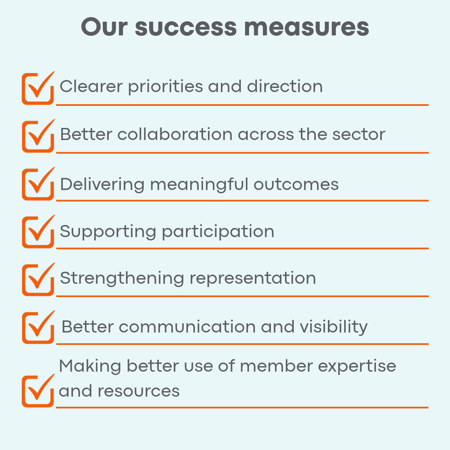
We recognise these are significant changes. The new model will be reviewed after 12 months to assess whether we are meeting our success measures.

Feedback from members will help inform future refinements.

The new sector programme model will be implemented over the coming months to ensure members have opportunities to understand the changes, provide feedback, and get involved.

See the timeline below for more information.

A model that will continue to evolve

While the future structure has now been approved by the Board, some elements will continue to be refined during implementation.

This approach will allow us to test the new model, learn from experience, and make adjustments where needed to ensure it delivers the greatest value for members and the sectors.


Timeline

December 2026 - February 2027: Learn more about the changes

As part of the announcement, members  have access to detailed information about the new model, including:

  • The future structure of WasteMINZ's sector programme
  • The role of Steering Committees, Working Groups and Communities of Practice
  • Success measures
  • Timelines. 

Information about Communities of Practice and how members can participate will be released in December. 

This information will be provided via the WasteMINZ website, member portal and communications channels such as the fortnightly Circular.

9 December: Webinar with WasteMINZ

WasteMINZ will host a webinar with Chief Executive Nic Quilty to walk members through the changes, explain the rationale behind the new model, and answer questions. This will provide an opportunity for members to better understand how the new structure will work in practice and what the changes will mean for them. Register now

February 2027 - Steering Committee elections

Steering Committee elections are expected to take place in mid-February 2027. Ahead of the elections, WasteMINZ will:

  • Work with the current steering committees to finalise the reserved-seat model for the new committees
  • Confirm election rules and nomination processes
  • Publish final governance documentation, including Terms of Reference and guidance materials
  • Provide information about the role and responsibilities of Steering Committee members and Chairs.

Steering Committees are likely to be in place by mid-April.

April 2027: Priority setting and work programme development begins

Following the WasteMINZ + ALGA Conference, the newly appointed Steering Committees will begin identifying priorities for the coming year.

A new Cross-sector Leadership Forum will also begin meeting regularly to support coordination across the organisation and help ensure work is focused on the issues that matter most to members and the wider sector.

 

Frequently Asked Questions

Why are these changes being made?

The waste, resource recovery and contaminated land sector has significantly changed since WasteMINZ was established in 1989. These changes will help WasteMINZ focus on strategic priorities, make better use of member expertise and ensure resources are directed where they can have the greatest impact.

Will members still be able to participate?

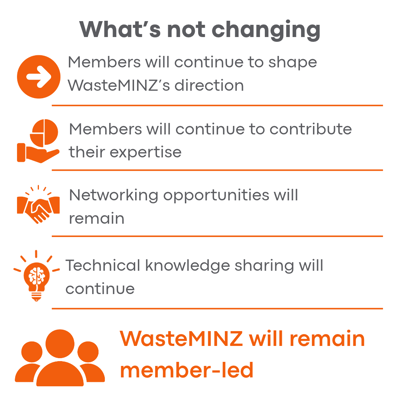
Yes. Members will continue to shape WasteMINZ's direction through Steering Committees, Working Groups and Communities of Practice.


What's the difference between a Steering Committee, Working Group and Community of Practice?

Steering Committees set priorities, provide oversight, and respond to legislative and policy changes (such as providing input into submissions to government consultations)

Working Groups develop and deliver specific projects.

Communities of Practice bring members together to network, share knowledge, discuss emerging issues and opportunities, and provide technical advice and insights to Steering Committees.

How can members propose new projects or initiatives?

WasteMINZ will be introducing a new Project Request Form as part of its project framework. The form will provide a consistent process for assessing and prioritising new initiatives, including their alignment with WasteMINZ strategic priorities, the benefits and outcomes they deliver for members, and organisational capacity to support them.

Any WasteMINZ member can submit a project proposal using the form, regardless of whether they are involved in a Steering Committee, Working Group or Community of Practice.

For more information about the Project Intake Form, please contact Shree Kumar.

How will Working Groups be established?

Working Groups will be established with approval from WasteMINZ and will operate with defined objectives, deliverables and timeframes. Each Working Group will receive oversight from a Steering Committee. Where a Working Group has a cross-sector focus, it will report to the Cross-Sector Leadership Forum.

New Working Groups may be created in response to priorities identified through the Project Intake Form process or other strategic needs. When a Working Group is approved, the relevant Steering Committee will determine the skills and expertise required and invite expressions of interest from the wider membership.


What is the role of the Steering Committee representative on a Working Group?

Each Working Group will include at least one Steering Committee representative.

Their role is to provide context, monitor scope, identify risks and maintain alignment between the work being undertaken and the Steering Committee’s priorities.

Why is Construction & Demolition Waste becoming a Community of Practice instead of a Sector Group?

The new sector groups focuses on systems and outcomes rather than individual material streams. Construction and Demolition waste remains an important area of work, and the Community of Practice provides a forum for members to share knowledge, discuss emerging issues and opportunities, and provide technical advice to the Circular Economy Steering Committee.

A Community of Practice is a more flexible model for this area, supporting ongoing collaboration without requiring a specific project or deliverable. Existing groups such as the C&D Research Working Group and Construction Waste Week Working Group will continue as Working Groups due to their defined projects and objectives. Additional Working Groups may be established as needed to deliver specific initiatives.


Why are Organic Materials and Behaviour Change Sector Groups becoming Communities of Practice?

These areas remain important and continue to benefit from strong member interest and technical expertise. Creating COPs provides a flexible forum for members to network, share knowledge, discuss emerging issues and opportunities, and contribute technical advice and insights directly to Steering Committees.

Where specific projects are identified, working groups can be established by the Steering Committees to deliver them, but the formation of these working groups must be approved by WasteMINZ.


Will the Health, Safety & Wellbeing work continue?

Yes.

Health, Safety & Wellbeing will continue to be an important consideration across all of WasteMINZ's work. Rather than operating through a standalone Sector Group, health, safety and wellbeing expertise will be embedded across Steering Committees and Working Groups.

As part of the Steering Committee election process, candidates will be asked to advise whether they have health, safety and wellbeing expertise. This information will be included in candidate profiles when voting opens, helping members elect committees with a broad mix of skills, experience and perspectives.

Where gaps in expertise are identified, Steering Committees will be able to co-opt members with specialist health, safety and wellbeing knowledge.

In addition, a dedicated Health, Safety & Wellbeing COP will provide opportunities for members to connect, share knowledge, discuss emerging issues and contribute specialist expertise to the wider sector.


Two working groups are being turned into Communities of Practice - what does this mean for non-members?

Under this new model, the Battery Management and Construction & Demolition Waste Working Groups will become Communities of Practice.

Only members can take part in the newly formed Communities of Practice, which include Behaviour Change, Organic Materials and Health, Safety & Wellbeing 

As a transitional arrangement, current non-member participants in the Battery Management and Construction & Demolition Waste Working Groups may continue their involvement in the communities of practice while they remain active in the sector. However, when a non-member participant leaves the industry or steps down from the Community of Practice, their position will not be replaced by another representative from the same non-member organisation.


Why are allocated seats being introduced?

Allocated seats will help ensure Steering Committees reflect the breadth of expertise, experience and perspectives across the sector.

Some seats will remain open so members can continue to stand for election if they feel they don't fit within the allocated seats. 

Have the allocated seats already been decided?

No.

Focus groups were invited to give feedback on the proposed allocated seats. We will now consult with steering committees on these seats, and these will be finalised before the election process commences in mid-February.

How will emerging professionals be involved?

The new model includes measures to strengthen succession planning and create opportunities for emerging professionals to contribute and develop leadership experience.

As part of the Steering Committee election process, candidates will be invited to identify whether they are an emerging professional. This information will be included in candidate profiles when voting opens, helping members elect committees with a broad mix of skills, experience and perspectives.

How will Communities of Practice be created in the future?

An initial set of COPs will be established as part of the new structure on a 12-month trial. 

Over time, additional COPs may be created where there is a clear member need and sufficient interest and participation. This would be at the discretion of the Cross-sector Leadership Forum and the WasteMINZ team.

How will WasteMINZ know whether the new model is working?

The new model will be reviewed after 12 months, against success criteria.

What will the role of Steering Committee Chairs be?

Steering Committee Chairs will be required to facilitate their steering committees and keep their committee members on task and on track. They will also be asked to take part in the Cross-sector Leadership Forum to ensure steering committees understand what each other is working on and develop shared priorities across the sector group programme.

Through the Cross-sector Leadership Forum, Chairs will also contribute to organisation-wide priorities and oversight of cross-sector initiatives such as advocacy, external engagement and programme communications.

What is the purpose of the Advocacy Working Group?

The Advocacy Working Group will help set WasteMINZ's advocacy priorities. The group will support the development of proactive submissions, position statements and other advocacy activities, working alongside Steering Committees to ensure these are informed by member expertise and stakeholder input.

The group will be established in early 2027 through an Expression of Interest process and operate under a Terms of Reference. The Expression of Interest will outline the skills and experience sought to ensure the group has the capability to lead WasteMINZ's advocacy programme.

Can non-members still be part of Working Groups? Yes. Preference will be given to members who submit an Expression of Interest to participate on a Working Group. However, if a Steering Committee agrees it needs expert advice from outside the membership, non-members can be co-opted on to the Working Group.

Ask your questions

If you have any questions about the implementation of the new model, please fill out this form. Chief Executive Nic Quilty will address them at the 9 December webinar. 

WasteMINZ_bg-CTA

Creating a future where people, communities and nature in Aotearoa New Zealand thrive together