

.jpg?width=300&name=Cans%20for%20kai%20(4).jpg)
.jpg?width=8192&height=5464&name=Cans%20for%20kai%20(1).jpg)
Cans for Kai, an initiative developed by Phoenix Recycling Group in partnership with LegaSea, was recently nominated for a WasteMINZ + ALGA Award for Excellence. This articles explains how the model uses one form of resource recovery to support another form of waste minimisation.
.jpg?width=283&height=212&name=Cans%20for%20kai%20(3).jpg)
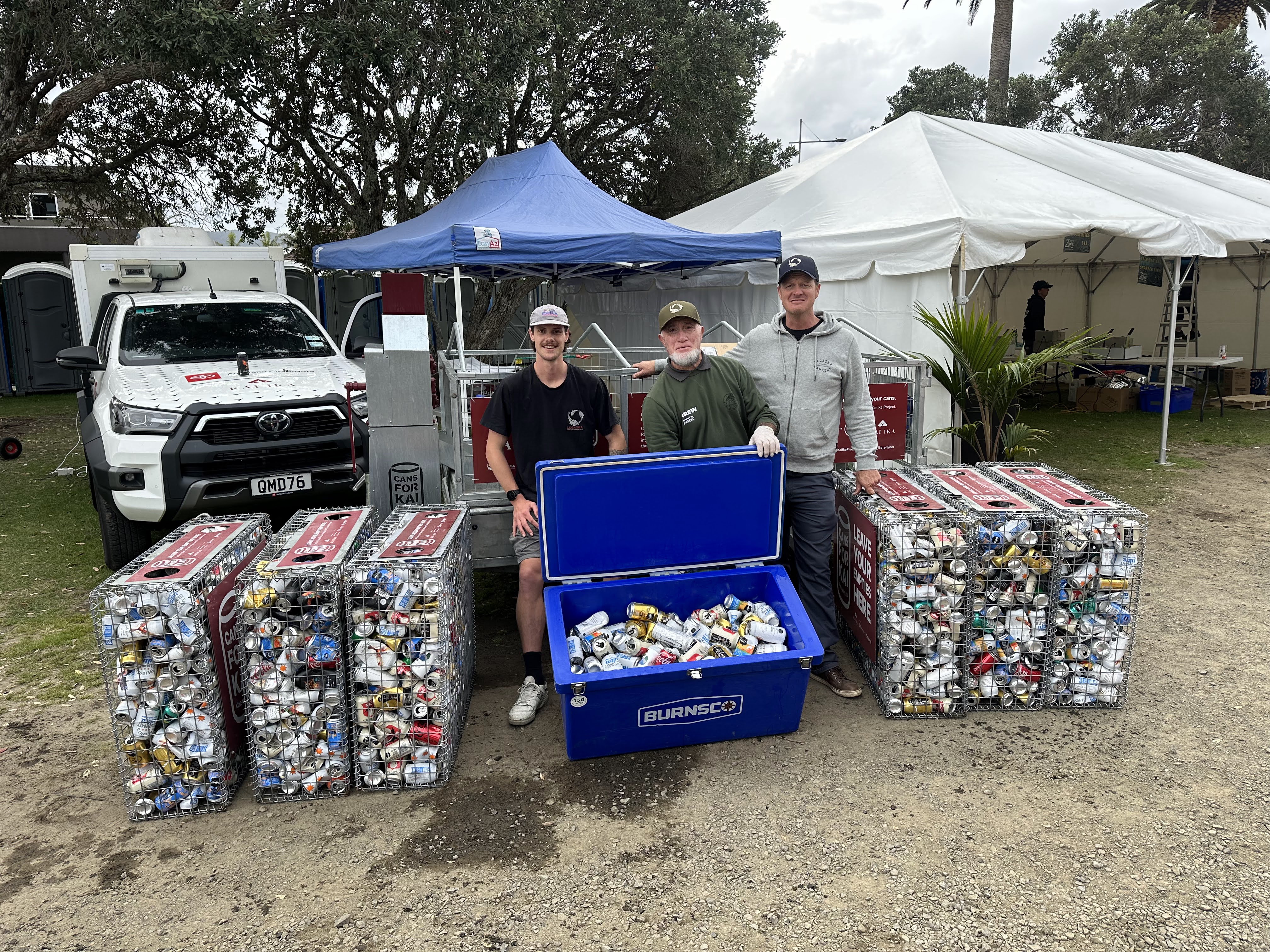
Cans for Kai takes a familiar activity, recycling, and connects it to a broader system of resource use. Developed by Phoenix Recycling Group in partnership with LegaSea, the initiative links aluminium can recovery with the redistribution of fish parts that might otherwise be discarded.
The concept is straightforward. Aluminium cans collected through community donation points are processed through Phoenix’s recycling network, and the value generated is directed to support the Kai Ika Project. This funding contributes to the collection and redistribution of fish heads and frames from the seafood sector to communities.
.jpg?width=247&height=162&name=Cans%20for%20kai%20(4).jpg) What sets the model apart is how it treats recycling as part of a wider process rather than an isolated outcome. Instead of stopping at material recovery, the programme
What sets the model apart is how it treats recycling as part of a wider process rather than an isolated outcome. Instead of stopping at material recovery, the programme
uses that recovery to enable another form of waste minimisation. In this way, one low-value household waste stream contributes to extending the use of another resource already within the system.
The scale of activity reflects this dual focus. Revenue from recycled cans has supported
the redistribution of significant quantities of kaimoana, with an estimated 200,000 meals
provided to families. At the same time, more than 50,000 kilograms of aluminium cans have been diverted from landfill in recent years, returning material to circulation and reducing emissions associated with primary production.
Participation is built around existing community behaviours. Collection points are located in accessible, everyday settings such as schools, retailers and community.jpg?width=273&height=182&name=Cans%20for%20kai%20(1).jpg) centres. There is no specialised infrastructure required, and people can also drop cans directly at Phoenix branches. This accessibility allows contributions to remain small and consistent, rather than dependent on large-scale inputs.
centres. There is no specialised infrastructure required, and people can also drop cans directly at Phoenix branches. This accessibility allows contributions to remain small and consistent, rather than dependent on large-scale inputs.
Operationally, the programme emphasises efficiency. Can collection is often aligned
with Kai Ika distribution routes, reducing the need for separate logistics. This integration
keeps costs manageable and allows the system to function with relatively low overheads. It also demonstrates how resource recovery activities can be combined without significantly increasing complexity.
From a financial perspective, the initiative is based on aggregation. Individual contributions of aluminium generate limited value on their own, but collectively they create a steady revenue stream. That income is reinvested into redistribution activities, providing a level of continuity that is less reliant on external funding cycles.
 The model has expanded beyond its initial base, with activity now taking place in several regions. Its structure allows for replication where similar networks exist, particularly where community collection, recycling capability and food redistribution can be linked.
Cans for Kai illustrates a practical shift in how resource recovery can be approached. By connecting recycling with redistribution, it moves beyond single outcomes and instead focuses on how different parts of the system can reinforce each other.